


FEATURED TOPIC
Navigating the Private Credit Landscape: Trends, Opportunities, and Risks
AIR DATE
November 24, 2025 – 12:00 PM
DISCUSSION HIGHLIGHTS
Join us for our next Monday Minute Chat as we explore the evolution of global credit since the Global Financial Crisis and the unique opportunities emerging in private credit. We’ll discuss why private credit is gaining traction in Canada, examine current trends and deal activity, and highlight the benefits of investing across the credit spectrum. The session will also cover key market risks and offer insights into where the private credit market may be headed next.
The Future of Energy in a Net Zero World
October 24, 2022 | 12:00 PM, EDT
While the global energy transition has given rise to new technologies and sectors focused on carbon reduction, it has also created a good deal of uncertainty for investors, particularly in countries like Canada where the energy industry plays a significant economic role. In this Monday Minute, we will look at the role policy can have in supporting the sectors and technologies that will help the world achieve Net Zero. We also dig into the data and how investors can identify real gamechangers — and avoid greenwashing.

Transcript: Navigating the Private Credit Landscape: Trends, Opportunities, and Risks
Air Date:
November 24, 2025 | 12:00 PM, EST
Good afternoon everyone, and thanks for joining us.
On behalf of the Canadian Leadership Congress, I'd like to welcome you to this week's Monday Minute Chat. My name is Sriram, I'm a director and private credit at BCI, and today I will be your moderator.
Our topic is navigating the private credit landscape, trends, opportunities, and risks.
And here to talk about it is Gino Di Censo, Vice-President, Fixed Income, CIBC Asset Management. Gino, welcome.
Thank you, Sriram. Pleasure to be here. I'm looking forward to this conversation. There is a lot happening in the world, and it's an especially interesting time to be, to talk about private credit.
We are living through a period of significant change. I mean, geopolitical risks continue to evolve. Fiscal and monetary policies are shifting. The regulatory environment feels a lot less predictable today than before.
Markets are volatile, and yet the economic picture remains surprisingly resilient. Or is it? So while the headlines can sound volatile underneath that, we are seeing a credit market that's adapting in real time.
Before we dive into the specifics of private credit, things like the rise of retail capital, credit quality, uh, maybe AI's growing influence, I think it helps to start with the big picture.
Gino, could you set the stage for us?
How do you see the health of the economy right now and what's your outlook as we move into 2026?
Thank you, Sriram. Yeah, so I'd say, I mean, as we're seeing with both the Federal Reserve and the, and the Bank of Canada, they're continuing their rating cycle with both cutting rates by 25 basis points.
Uh, most recently, however, I think at least in Canada, there's been hawkish communication and potential for rates to hold steady. And that's certainly what the markets forecasting, uh, in the US we're forecasting a, a, a few more rate cuts, but nonetheless, um, you know, uh, I think the, the consensus is that we're not going be going down.
Certainly, we're not gonna be going back to the, to the zero or, or very low, ultra-low interest rate environment we saw in 2020, 2022.
So I think from, you know, as it relates to private credit credit, we continue to see resilience in the market. Uh, we think, you know, uh, on the one hand you have kind of two competing factors.
You have declining base rates, which, um, may depress total returns. But at the same time, you know, if, if there are declining base rates, we think that could stimulate the market where, you know, we're certainly seeing pent up demand from a private equity, dry powder perspective and, and, and deal sourcing perspective.
So I think, uh, should more rate cuts continue, I think it's gonna be a, a tailwind more than, more than a headwind. But ultimately what we are seeing is some stability in those rate cuts is communicated by the central banks.
Thanks, Gino. That's a very helpful backdrop.
Now, let's bring that down to the ground level of private credit. The asset class has grown tremendously, but it's also evolving, especially with, uh, retail participation increasing and questions around whether alpha still exists in direct lending.
So how do you, how do you see that and what are your views on that?
Yeah, yeah, for sure.
No, it's, it's, it's a great question and certainly there's, uh, a few headlines that have come out recently which have maybe, uh, caused some concern amongst investors.
And I'll, and I'll dive into that. But, you know, before I get into that component, what I would say is we are seeing borrow performance remain generally resilient. We think the market is experiencing, and what we're seeing across the board is market is experiencing some spread compression for sure.
Um, but we do expect attractive spread premiums to continue over the public market. Uh, we're also seeing attractive spread premiums in Canada versus, uh, versus the us kind of similar to what we're seeing in Europe, um, partially due to the fragmented market and, and less competition for deal flow.
So all this to say, we think, you know, uh, the, the pipeline is strong and we think the spread premiums will remain resilient, but certainly, uh, you know, you are seeing headlines, uh, in terms of some of the, uh, underlying companies such as tricolor, um, that are experiencing defaults first brands.
So what I would say, and there's certainly been been, uh, a lot of headline news, which is maybe causing some, some negative headline risk, but I would say is we could say consider both of these, uh, underlying stories and there's also broadband telecom as more, uh, company specific related issues.
But what I would say is, you know, I think it does highlight the importance despite these issues being more, um, company specific rather than systemic. I do think that it highlights the need to ensure that as an investor you're allocating to a manager with strong debt credit discipline, with a solid workout team, should things go south.
I think what's, uh, what's resonated certainly at CIBC is our, our unique sourcing channel and risk sharing model, particularly in the current environment. Um, or in, you know, what I would also say is, you know, defaults are inherently, um, gonna be an, an a, a natural part of non investor grade direct lending.
They're gonna happen, um, regardless of the market environment, it's a, it's a normal part of life in the sub investment grade world that I, that being said, again, you, you should be, you know, when you think about sourcing, you want to be allocating to investor with strong, to an investor with strong credit discipline and the, the how to to navigate some of these underlying weaknesses.
Uh, other point I would add is for investors who are not comfortable with any defaults, um, they can look to something like an investment grade private credit strategy or an infrastructure, real asset, private credit strategy where you should be expecting less defaults.
Um, but in return you're giving up some, some, some return. Uh, but, but some investors may be comfortable with that. So, so I, I would say I would point to, to that I would also say, you know, more important than maybe kind of defaults, which are kind of springing up in the headlines I'd say is the importance of, um, of loss rates and, and ensuring that, you know, a default in of itself isn't necessarily a bad thing.
And that's why I pointed earlier to the, to the strength of a workout team and why that's so important. Because ultimately, if a loan gets into trouble, you wanna have, you wanna be allocated to an investment manager who can ensure you are gonna be receiving at least some or, or if not all of the capital back.
Um, and that kinda really speaks to what the loss rate looks at.
So, um, so certainly some some negative headline news, but again, we, we don't think it's, uh, speaking to any broad systemic issues in the private credit space.
The other area that we, we've, I've seen pop up and we've seen pop up is payment in kind and the use of the increasing use of picks in the marketplace. I'd say, you know, a payment in kind.
So, and just to take a step back for, for those I maybe aren't aware, it's really a loan feature that allows an investor to borrow, that allows a borrower to defer regular interest payments to a later date by adding interest to the principal balance of the loan.
And you're gonna do that for two reasons. And I think one is, is more problematic than the other.
The first reason is if you as a company say, uh, lender, uh, I, I'd like to defer interest payments because I'm going through, um, uh, I dunno, a company expansion or I'm undergoing a large CapEx project and I, I I want to use the funds internally to allocate and help grow the business rather than servicing this interest at this time.
And as an investor, you're generally okay with that if you really understand the underlying economics of the business and, and, and know that they are going to be using that money, um, for growth purposes and, and are confident that they're gonna be able to repay the loan.
The other way an investor would allocate or want to use pick is if they are facing financial difficulty or financial struggles. Again, I would say this is necessarily a bad thing, uh, but you wanna be a keeping a mindful eye of this component in particular. because it could speak to some underlying stressors.
So what I would say is, you know, I think investors should be comfortable with some pick exposure, especially when included in a loan origination.
A lot of investment and lenders will use pick as part of the negotiation and ability to originate loans. But, you know, investors should be mindful of their overall exposure to pick and why a company might be using it.
Again, whether that's for stressors or to fund help on future growth, for example.
So long-winded, long-winded comment there, but, uh, sir, hopefully that helps provide some, some, some, um, some answers there.
Oh, definitely lots of food for thought.
Let's, let's unpack a few of those, those things. Right?
Sure. So agreed on the recent prominent fraud cases, it feels like it's more of an isolated governance situations as opposed to something systemic.
Mm-hmm. Um, so I think that's a reasonable that that's a reasonable thesis to work with.
On the pick side, what I'm hearing you say is there's a good pick and a bad pick.
Good pick is something that supports the growth of a company, maybe near term and there's a better use for cash. And as a lender, if you're going in recognizing that that's actually helpful to your credit case overall, then that's not a bad thing pick in that case.
Whereas if, because of distress and of cashflow, uh, cashflow issues, if a company has to defer, it's almost like a soft, uh, soft default.
Right? Exactly. Where they extend, uh, where convert into pick, that's a bad pick. So I, what you're saying then is you should be able to distinguish between a good pick and a backpack.
Exactly. Okay.
Now let's, let's maybe spend a a minute on that retail component, which you have mentioned previously, the influx, the rise of the retail investor.
What's that doing to?
I think the, the way to it back to something concrete is between the BDCs pri uh, public BDCs, there's being a sizable amount of retail capital coming into the industry.
And then you also have the private wealth, uh, channels that these large credit managers have where they're able to pull in, uh, some of the effectively institutional retail kind of capital.
So versus the traditional investors like pension funds, insurance companies that used to be in this space.
Do, do you, is your sense then that the influx of this retail investor is sort of crowding out the institutional investors purely from a returns perspective?
Simply because there's so much capital in the system that needs to be deployed that rates your, your pricing, your spreads are almost secondary to the need to deploy and a Corolla.
And, and, and, and part B to that question for you is where spreads stand today?
Uh, you know, upper middle market, middle to upper middle market s plus four 50. Do you feel like from a spread perspective, we've reached a point where lenders can't really go below that in a substantial and systemic manner simply because the return profiles don't work anymore, uh, especially as it relates to what the investors expect.
So could you tie those things together and help us understand those two pieces a little bit better?
Sure, for sure. Yeah. Um, great, great question.
So I'd say first in terms of the row flow of assets at the retail, yeah, this is, this is certainly happening.I think, you know, investment managers are, are likely viewing kind of the retail market as kind of the next leg of growth for, for their underlying assets.
Um, which i, I don't think inherently is, is a bad thing. Like in, in a way you're demo democratizing private investments, which, you know, historically have only been available to large institutional pension plans.
So I think it's, it's, it's a, it's a good thing that retail investors have access to these private investments and, and private credit. But what I would say, um, is just, you know, retail investors need to be aware of what, what they're getting into. And I think some of the caution is surrounding, um, liquidity and the, the understanding of liquidity.
Because ultimately on the private credit side, these are e-liquid investments. Uh, now some of the retail funds or feeder vehicles are promising liquidity, um, which is fair as long as there's a, a good understanding from the investor on how they're deriv that liquidity.
So what will happen in, in some cases is a private, um, allocator will include a component, call it 40% or what have you, to public bonds to help provide liquidity in the market.
And, and that's not necessarily, um, a bad thing, right?
That that is gonna provide your source of liquidity. It may come at the expense of a bit of return, but ultimately, if you are going to be promising an investor liquidity, that is one way to, to get there.
So you're almost seeing the blending of, of, um, private and public credit, which is creating some interesting vehicles. So, uh, you know, I'd say from a, um, from a headline perspective, there's, maybe been some negative sentiment around that retail money flowing into what were historically institutional products.
But I would say there that it, it is very early days or least. So yes, there is a lot of money flowing in from the retail side, and this is a growth area for investment managers.
But if you look at kind of the size of the institutional capital versus retail capital flowing into the funds, retail still dwarfs the institutional side.
So I think it's still early days and, um, you know, what it is creating from an interesting perspective is, is new product design more some of these semi-liquid public private funds interval structures in the US and, and more evergreen vehicles.
So I think it's, uh, it's a good thing for the market. But, you know, to your other point, if, um, you know, and m and a markets remain depressed, we're seeing some, some pickup in activity,
and that's partially due to maybe stability and base rates or base rates coming down, but they're, they're still lower.
So the, the m and a market is, is softer than it had been historically.
So, you know, if more and more capital keeps flowing into the private credit space, uh, faster than deals are being originated, this could provide a cha a challenge in the market. And so, you know, we don't wanna see as intense competition for private credit deals leading to, to loosening underwriting standards and the ability to pull capital, which could lead to future, um, asset deterioration.
So it's important to keep a mindful eye on, on those underwriting standards and ensuring that, that we're not seeing any loosening there.
So I'd say that's thing, something that we're watching, um, from a general market perspective. But overall, again, I think the still nascent, um, I think it, it's probably a good thing that retail investors are getting assets to some of these vehicles and we're coming up with innovative structures to help support these channels.
Uh, CIBC included. Um, and then your comment on, uh, spreads, I, I guess it was, were you asking more, is there, um, I guess a, a baseline in terms of where it, it starts to not make economic sense?
Yeah. Uh, yeah, I don't think there's a baseline from an investment manager perspective.
I think, yeah, certainly if spreads continue to narrow, there could be, you could argue, well, maybe an investor will say, I'll just go to the public market side. But I think there too, you're seeing spread compression. So I, I'd say, um, from that perspective, there's, there's, there's not much concern. I think we continue to expect and continue to see solid spread levels.
I don't know what that bottom is, but we continue to think there's gonna be healthy spreads versus the public environment. It might challenge you as an investor to look into different parts of the market, whether it's asset-based finance, specialty finance, where spreads are generally quite wide.
Um, but I still think even on the, the direct lending core, um, part of the private credit market, we're gonna continue to see healthy spreads. And so, um, I, I don't, I guess I can't point to a specific bottoming out. I think it's, um, it's gonna remain a, a fairly healthy premium.
Fair, fair points. I think, uh, one of the points you had touched upon earlier on, uh, in the conversation was, look, it's really about loss, not really default base.
That in and of itself is, is catches your attention, but it's really your recovery. And that's where it helps to have this background, uh, capability, structural capability to sort of handle those issues.
Look, by all accounts, we've been in a fairly benign part of what has been a really prolonged credit cycle, right? I mean, despite our, our expectations, it's continued to sort of continue to be benign.
Do you think when you, you know, eventually over time you'll start to see more dispersion in returns between managers and eventually that'll help create more, uh, separation between various managers and their underwriting policies and their ability to sort of stay away from the difficult, uh, credits and really get into the good credits.
Will we see that happen in the future? Or is there something structural about this market where we'll continue to sort of truck along as we've been over the last few years?
Yeah, so look, I think the dispersion has been there and we'll continue to be there.
I think yes, I, I would expect more, uh, more stresses to kind of weed out the, the, the good and the, from the bad, from a manager perspective, it was certainly easier in the kind of the 2020, 22 vintages to generate strong returns.
Um, so I think the dispersion is, is, is always, has always been there, but it, yes, it, it could certainly get wider. I think a lot of the, you know, 2020, call it 2022 vintages, were rotten with some of these managers with, uh, an aggressive leverage with light covenants. And we're now seeing some of those managers starting to report stresses building through some of these loans.
So, um, certainly, uh, to your, to your point, I think that this version is gonna continue. I think the, you know, that being said, um, I think private credit is maturing to more normal part of a portfolio toolkit.
We're seeing a lot of investors view credit the same way they would real estate, um, and, and infrastructure from an alternative perspective. So we think it's gonna continue to be that core part of a portfolio.
You know, historically over time, if you look at the corporate, uh, private credit market returns have been consistently positive throughout cycles. And we think that illiquidity premium's gonna remain. Um, you might see spread compression in certain segments, but we think, uh, structural inefficiencies and complexities will still provide room for excess returns.
Might have to look a little bit harder to find them though.
Understood, understood.
Now maybe we pivot to a slightly different driver that's also shaping the industry technology. Mm-hmm. You know, AI has become a conversation topic more and more, uh, you know, uh, as we get into this mega cap, uh, mega CapEx cycle for ai, which is hard to escape from. So are you seeing any, but, but you know, there's, there's this investment component of ai, but there's also the actual impact AI has on the sector itself, on private credit itself.
Are you seeing any tangible impact in credit underwriting monitoring or, or, or manage selection or those kind of things that, from these AI technologies?
Yeah, for sure. Um, we're, we're certainly seeing, and yes, to your, to your point, or like both on the, as an investment theme, and I can touch on that after. But, but certainly from a toolkit perspective, we think ai, um, has lots of room to, to help out. And I think we're, we're in nascent stages in its very early days, but certainly, um, we know whether it's helping review term sheets or risk monitoring with underlying portfolio companies, AI certainly has the ability to add value here and really help teams become more efficient in, in the, in the process.
So I think the, uh, the use of AI is only gonna grow amongst investment teams as, um, not as a replacement, but really as a tool to help enhance diligence and monitoring. And I think that's gonna be an overall great thing for the, for the market in general.
And then from, you know, from an investment theme standpoint, uh, you know, 40% of us, GDP right now and is being driven by CapEx technology, CapEx and it's really infrastructure, data infrastructure and data centers. And so on, our investment grade infrastructure, debt fund, apologies, um, we are allocating, we have a couple of data center investments and we will likely be adding a few more.
So there's certainly a lot of opportunity on the debt side to lend to some of these large projects that require a significant amount of CapEx. And we think as a, as a firm and, um, you know, not just in private credit, we think this is a structural tailwind that's gonna continue for a while.
And so there's certainly opportunities on the investment side, but definitely opportunities as well as an additional resource to help our investment teams diligence and monitor their portfolio.
So, and you know, there's probably uses of AI that, uh, I haven't even thought of yet that are gonna come to market.
So again, nascent stages, but I think we're, we're all very excited about the use of AI to help, uh, augment the investment process.
And those are some staggering numbers, right?
I mean, what, what, what you just laid out and there is no, you, you are either soon enough, we are all either have to gonna be all gonna have to be AI native or not being able to function and do the things we kind of do today.
Uh, it it's not a choice. I think it's just a question of how quickly, how firms are quickly our investors, how quickly our managers, everybody else is adapting to these technologies.
And this is obviously a very speculative question, but do you think there's a way to sort of, uh, find that alpha or edge using ai, uh, the way, do you guys even think about it in that perspective? Uh,
Certainly I think you, yeah, I mean, you know, the ability to, uh, I think the ability to parse through maybe a term sheet quicker than competition or ability to, um, unlock value, I think, uh, yeah,
I can certainly help with that for sure.
So I, um, I can't to point to any specific examples where it's, it's directly driven alpha, but I think it directly for sure.
Um, and, uh, yeah, again, if you're competing with other investment firms that are using ai, I think to that point, you, you, you want to be on, on board and leverage it as well.
So yeah, I think, uh, again, nascent days, but, but certainly,
Okay, well, let's land this thing now.
What's your outlook for private credit over the next, uh, two to four quarters? Where do you see the best risk adjusted opportunities and more importantly, what's keeping you cautious?
Yeah, that's a good question.
So I think, again, you know, we, we continue to think the case for private markets and private credit remains strong. Investors should continue to view private credit as a core component of portfolio in a diversifier to public public markets.
Despite, you know, declining yields in some spread compression.
I think, you know, now more than ever in this point's a year earlier, question about dispersion manager selection will be critical, especially as the market matures and competition intensifies.
Um, I think the, despite the spread compression we're seeing a liquidity premium is still there and, and should to remain. I think there's been a lot of the, the flow of retail and, and just in general, there's some, some exciting areas. And I will speak to kind of the newer parts of the, the private credit market. And where we're seeing Alpha, um, is in, uh, not only direct lending, but areas such as asset-based finance, specialty finance that are directing to underlying, uh, hard assets or receivables.
We think there's a lot of opportunity to add additional alpha there. Um, but importantly I think there's a lot of investors who are looking for a single ticket solution. I think, um, you know, I almost look at it the same way I would kind of fixed income before the advent of, of core plus funds.
I think the, um, for smaller pension plans are those, you know, if I'm sitting on a board, I don't want to have to decide, well, I, I like corporate lending, but maybe there's room for opportunistic.
Where can I add opportunistic and when should I be adding it?
I'd rather kind of give that or outsource that decision making to, to managers, so to rely on some manager expertise there.
And so what we're seeing and, and developing, uh, with a, a soon to be launched product is a single kind of ticket, multi-asset credit solution that kind has the opportunity to deploy across different credit markets and, and sub-sectors.
Um, you know, I think they're gonna probably all have, uh, larger component to direct lending, but funds that have flexibility to invest in some of these opportunistic sectors, I think are gonna be coming, uh, to grow more and more in popularity.
And again, it's a way to add additional alpha, but also, um, and, and rely on the manager's expertise to do so. So I think you're gonna see, uh, growth in, in, in that type of private credit fund, uh, as well, you're gonna see more, more blending of kind of public and private credits, maybe more so on the, on the retail side.
Um, but certainly even on the institutional side, um, you know, uh, you know, my, in my past life in that as an allocator, there was a ton of new money flowing into evergreen vehicles. Uh, less so from a liquidity standpoint, at least on the institutional side, more so on the ability to, to reduce some of the administration around vintage diversification and having to, to think about re-upping.
So I think that trend is gonna continue. Um, and, and, and again, we're, we're, we're launching private credit funds to, to support that ecosystem as well. Um, and then, you know, in, in, in terms of risks, I'd say, you know, I can't to point to any one particular risk risk that's maybe keeping me up at night, but one thing that we are paying close attention to is some of the underlying, uh, the health of some of the underlying companies. We are seeing some softness with, um, with some of the, uh, consumer discretionary, uh, focused companies or companies that are, rely heavily on, uh, maybe more cyclical parts of the, the market.
Um, and so we are, we've all, well, we've always been doing this, but, but looking at companies that are non, um, non non-cyclical with healthy cash flows and healthy, um, uh, healthy markets and moats that can support any kind of stresses in the market.
And so, um, we think that's gonna continue and that's gonna be a critical part of, of our investment thesis.
So, um, I think investors should, should be keeping an eye despite, you know, my comments on pick, I think investors should be keeping an eye on, on, on pick and how it's being used in their portfolios. And, you know, I would ignore some of the more headline risks that we're seeing with some of the single ticket companies that, again, I don't believe are systemic in nature.
So, um, I think it's a, continues to be an exciting time to invest in private credit. And again, we're, we're excited about the opportunity set going forward.
You no thank you. That, that was some terrific insight. It's clear that this remains a complex but opportunity rich part of the market.
And while you should be cautious, as, as you rightly pointed out, there's still plenty of opportunities for investors, existing investors and new investors too.
Well, that concludes our session for today. Thank you everyone who tuned in.
We hope you found this conversation helpful.
Have a good day.
Access to the Monday Minute provides you the link to view at your leisure or share with your team.

GINO DI CENSO, CFA
Vice-President, Fixed Income | CIBC Asset Management
Gino Di Censo is Vice President, Fixed Income at CIBC Asset Management. In his role, he helps develop investment strategies, insights and research, and is instrumental in ensuring the firm’s fixed income suite of solutions is designed to fulfill clients’ current and future needs.
Prior to joining CIBC Asset Management in 2025, Mr. Di Censo was Director, Investment Consulting at Ekler, specializing in fixed income and private debt manager research as well as institutional portfolio consultation. He began his career in financial services in 2009.
Mr. Di Censo holds an Honours Bachelor of Science in Biochemistry and Human Biology from the University of Toronto, and a Master of Business Administration from Concordia University. He is a CFA charterholder and a member of the CFA Society of Toronto.
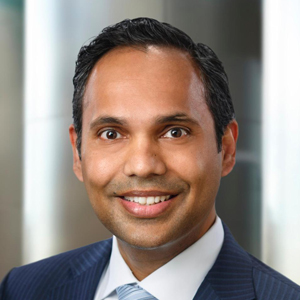
SRIRAM VEDULA
Director, Private Debt | BCI
Sriram Vedula is a Senior Principal in the Private Credit Fund, within BCI. In this capacity, Sriram makes investment decisions that lead to the deployment of capital into direct lending and syndicated loan opportunities across sectors and geographies. Earlier in his career, Sriram was an experienced and highly regarded investment banker with 17+ years of domestic and cross-border M&A and corporate finance experience. Through his investment banking career, Sriram led the execution of several landmark M&A, Equity and High Yield Debt transactions and has built an extensive network of corporate clients, institutional investors and family offices.
Prior to BCI, Sriram was a Director, Investment Banking, Global Energy, with Credit Suisse in Calgary. In this capacity he covered Credit Suisse’s Canadian E&P clients and helped grow the platform into one of the top two global investment banks in the city. Prior to Credit Suisse, Sriram was a Vice President in TD Securities’ Investment Banking, Global Energy group in Calgary. Prior to moving to Calgary in 2009, Sriram was an Investment Banking Associate, Latin America coverage group, with Deutsche Bank in New York.
Sriram has an MBA in Finance from New York University’s Stern School of Business, where he was the recipient of the Director’s Fellow Scholarship, and a Bachelor’s degree in Engineering from Andhra University in India.

